The Great Disruption: From Web2 to Web3
In a world reminiscent of Plato’s allegory of the cave, shadows dance across the walls, distorting our understanding of reality. This metaphor of illusion mirrors our lives today, where digital structures and…
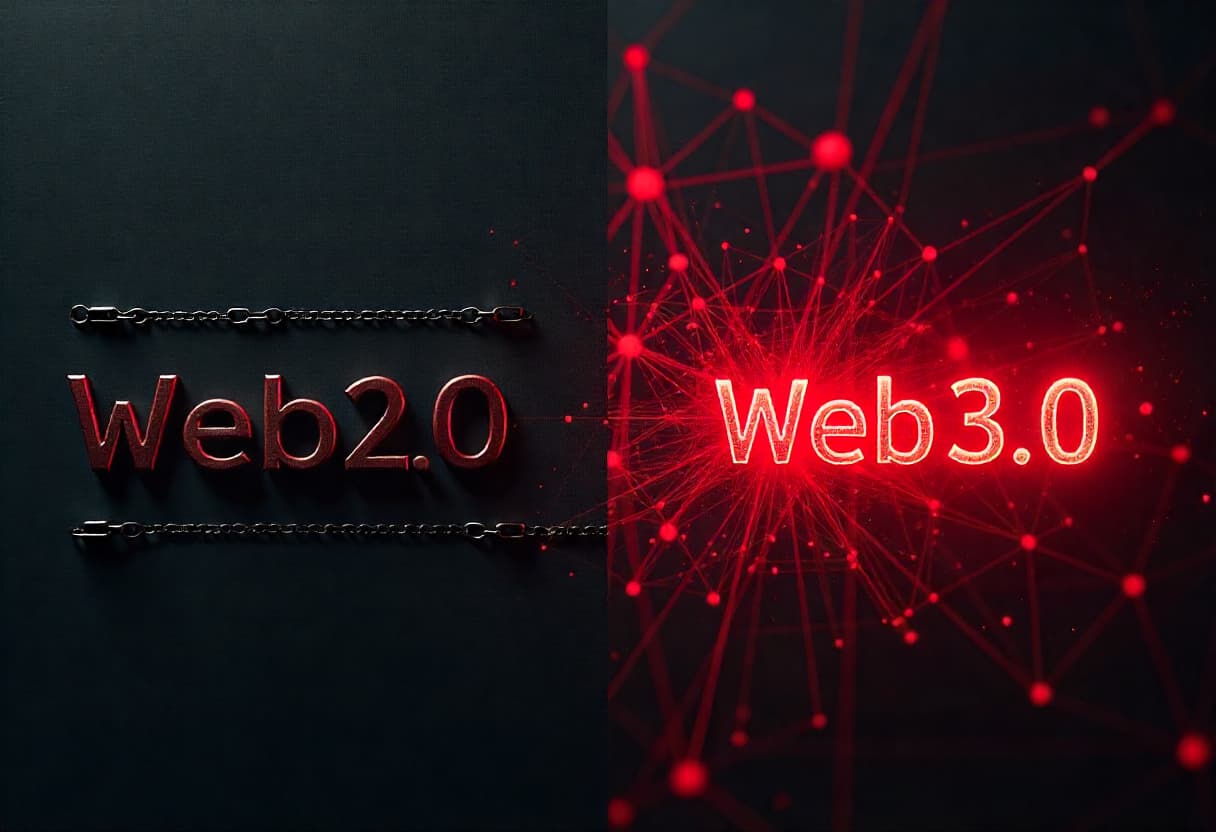
In a world reminiscent of Plato’s allegory of the cave, shadows dance across the walls, distorting our understanding of reality. This metaphor of illusion mirrors our lives today, where digital structures and societal norms mask deeper truths. Like The Matrix, our modern existence is a carefully constructed prison controlled by unseen forces. As Morpheus questions Neo in the iconic film, “What is real? How do you define real?” this inquiry urges us to confront the frameworks—governance, education, finance, and even religion—that perpetuate the status quo and obscure true freedom.
The Matrix as an Allegory for Our Reality
The Matrix is more than a sci-fi masterpiece; it reflects our reality and is an allegory for liberation. While the phrase “Exit the Matrix” evokes thoughts of escape, the film’s deeper message emphasizes something more profound: re-entering the Matrix armed with knowledge and purpose.
Neo’s journey exemplifies this transformation. He begins as a passive participant, unaware of the forces controlling his reality, and evolves into an empowered individual determined to dismantle oppressive systems. This narrative resonates strongly today as we grapple with the limitations of our digital world, particularly in the context of Web2.
Web2, the current iteration of the Internet, is characterized by centralized control. Beneath its surface lies a web of invisible chains—centralized banking, healthcare monopolies, and education gatekeeping. These institutions offer the illusion of choice and freedom while maintaining control and perpetuating inequality.
Web3: The Catalyst for the Great Disruption
As we stand at the threshold of the Digital Golden Age, Web3 emerges as a transformative force—a Great Disruption challenging the centralized paradigms of Web2. Unlike its predecessor, Web3 redistributes power, placing agency back into the hands of individuals through decentralization.
Decentralized Finance (DeFi): Liberation Through Transparency
Decentralized finance (DeFi) disrupts traditional banking by eliminating intermediaries and creating equitable financial ecosystems. In contrast to the centralized banking systems of Web2, where wealth is concentrated and access is restricted, DeFi empowers individuals to manage their finances autonomously.
This seismic shift mirrors Neo’s awakening in The Matrix. Just as Neo learns to manipulate the rules of his digital prison, DeFi users operate outside institutional constraints, navigating a financial landscape defined by transparency and fairness. With tools like smart contracts and blockchain technology, DeFi ensures that transactions are secure, verifiable, and accessible to all.
Decentralized Autonomous Organizations (DAOs): Collective Empowerment
Governance structures are also revolutionized through Decentralized Autonomous Organizations (DAOs). Traditional corporate hierarchies centralize decision-making power, often excluding stakeholders from meaningful participation. DAOs flip this model by enabling collective governance, where every member has a voice.
As Morpheus says, “The Matrix is everywhere; it is all around you.” DAOs directly challenge this pervasive system of control by offering an alternative framework for collaboration. From project funding to operational decisions, DAOs empower individuals to shape the systems they are part of, fostering transparency, accountability, and shared ownership.
Decentralized Education: Knowledge Without Gatekeeping
Education, long controlled by institutional gatekeepers, is being reimagined in Web3. Decentralized platforms enable peer-to-peer learning, breaking down barriers to access and allowing knowledge to flow freely.
In this model, learners and teachers are equals, exchanging insights without the constraints of traditional academic hierarchies. Morpheus’s guidance—“I can only show you the door. You’re the one who has to walk through it”—embodies this shift. Like Neo, learners must embrace the unknown and take control of their educational journeys, discovering purpose and empowerment along the way.
The Illusion of Freedom
For too long, Web2 has sold us the illusion of freedom. Social media platforms claim to connect us, yet they harvest our data. Centralized institutions promise convenience, yet they entrench inequality. True liberation requires more than passive participation—it demands resilience, awareness, and action.
Trials and tribulations mark Neo’s journey in The Matrix as he confronts the agents of control. Similarly, transitioning to Web3 involves overcoming entrenched paradigms and resisting the comfort of familiar systems. It is a challenging path, but one that leads to genuine empowerment.
Web3 in Action: Real-World Applications
DeFi in Practice
Imagine a world where financial transactions are no longer governed by banks but by decentralized networks. This is already happening through platforms like Uniswap and Aave, which enable users to lend, borrow, and trade without intermediaries.
DAOs Shaping Governance
DAOs are redefining governance across industries. For instance, platforms like MakerDAO manage stablecoins through collective decision-making, while ConstitutionDAO brought together thousands of people to bid on a rare copy of the U.S. Constitution. These examples highlight the power of collective participation in shaping outcomes.
Decentralized Learning Communities
Educational platforms leveraging blockchain are emerging, offering certifications and resources that are accessible globally. These platforms eliminate the need for expensive degrees, allowing learners to build skills and prove expertise on their own terms.
The Call to Action
The Matrix is more than a fictional dystopia—it is an allegory for our time. As we transition from Web2 to Web3, we are presented with a choice:
- Remain passive in the shadows of centralized systems, or
- Step into the light of decentralization, distribution, and empowerment.
Web3 offers an unprecedented opportunity to reimagine our digital lives. We can create a reality where freedom and agency thrive by embracing decentralization and actively shaping new systems.