Unlocking the Mind: Exploring Telepathy, Autism, and the Future of Wireless Communication
In an increasingly connected world, the idea of telepathy, direct mind-to-mind communication, is no longer confined to the pages of science fiction novels. Emerging research suggests that our brains hold untapped…
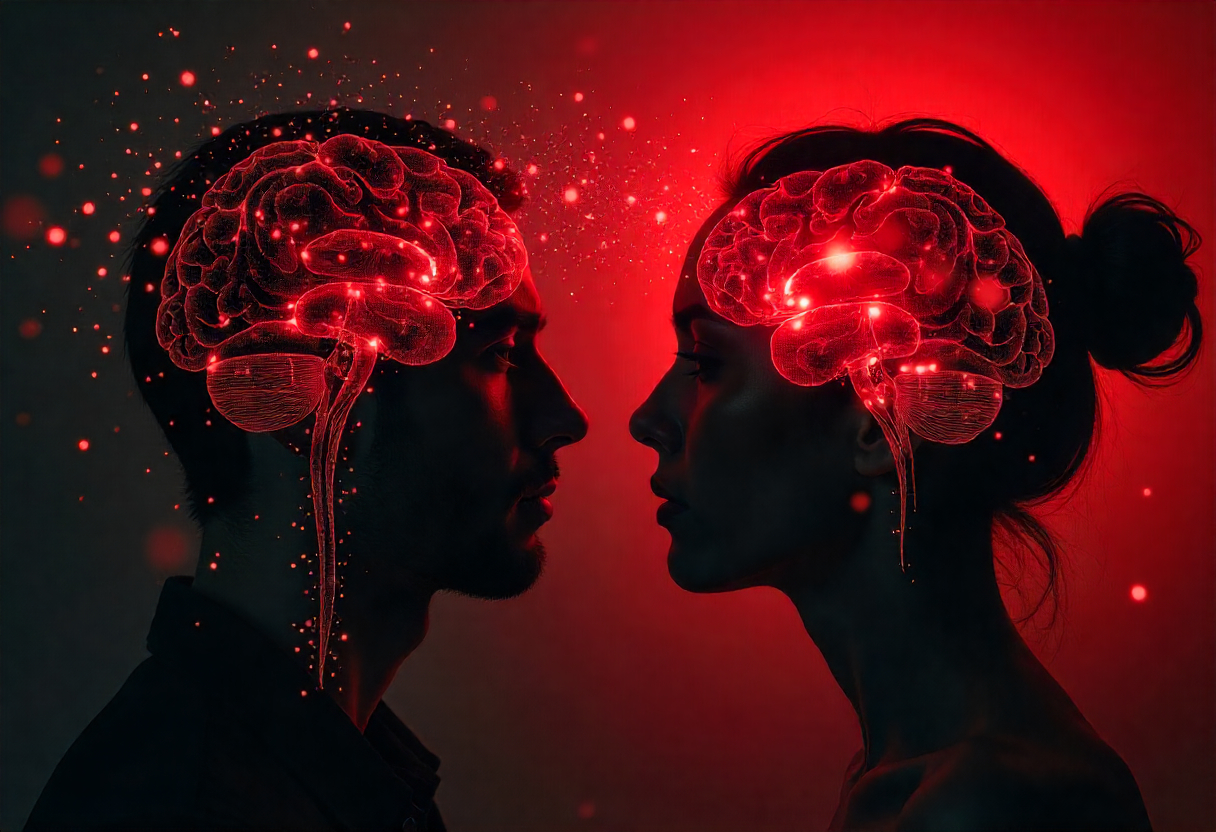
In an increasingly connected world, the idea of telepathy, direct mind-to-mind communication, is no longer confined to the pages of science fiction novels. Emerging research suggests that our brains hold untapped potential for connection, like wireless devices communicating through Wi-Fi. The pioneering work of researchers like Dr. Powell highlights fascinating intersections between telepathy, autism, and the future of wireless communication. This exploration points to a future where thoughts and emotions may flow as seamlessly as data across digital networks.
At MetaTech Web Solutions, innovation often comes from bridging science, technology, and human experience. Understanding how unique perspectives, such as those within the autism spectrum, connect to new communication paradigms helps us imagine the next digital frontier.
The Groundbreaking Work of Dr. Powell
Dr. Powell’s research focuses on extrasensory perception (ESP) and telepathy, with a particular interest in individuals on the autism spectrum. His studies ask a bold question: could the heightened sensitivities often seen in autistic individuals reveal natural mind-to-mind communication abilities?
By observing intuitive responses, emotional awareness, and nonverbal connections, Dr. Powell challenges conventional views of communication. His work suggests that the boundaries between neurology, psychology, and wireless technology may be thinner than we realize.
Autism: A Historical and Modern Perspective
The concept of autism first entered medical literature in the early 20th century, when psychiatrist Eugen Bleuler coined the term. Later, researchers such as Leo Kanner and Hans Asperger identified autism as a developmental condition characterized by atypical social interactions and communication challenges.
Today, autism is recognized as a spectrum that includes a wide variety of experiences and abilities. According to the CDC, about 1 in 44 children in the U.S. is diagnosed with autism spectrum disorder (ASD). While traditional frameworks often emphasize deficits, modern research highlights unique strengths among individuals with autism, ranging from advanced pattern recognition to deep emotional sensitivity.
Dr. Powell’s work builds on this shift, exploring whether individuals on the spectrum may also possess heightened abilities that could extend into extrasensory realms.
Telepathy and Autism: Unveiling New Dimensions of Communication
Heightened Nonverbal Sensitivity
Many individuals with autism demonstrate remarkable sensitivity to nonverbal cues. They may recognize subtle emotional states or anticipate needs without verbal explanation. Caregivers frequently describe experiences where children with autism respond to unspoken thoughts or emotions in ways that seem intuitive.
Dr. Powell suggests these moments point to untapped forms of communication, what some might describe as telepathic sensitivity. While the idea remains controversial, such accounts encourage deeper study into how the brain processes nonverbal and emotional information.
Controlled Experiments in ESP
To test these observations, Dr. Powell has designed controlled experiments in which participants attempt to share thoughts or emotions without physical or verbal cues. Early findings reveal intriguing possibilities, especially when considering the role of neural oscillations, the brain’s rhythmic activity patterns. These oscillations may act like “channels,” potentially allowing connections between minds in ways science is only beginning to understand.
Telepathy and Wireless Technology: Parallels and Possibilities
The similarities between telepathy and wireless communication are striking. Both involve transmitting information across invisible channels. Just as Wi-Fi enables devices to communicate seamlessly, could the human brain one day be shown to operate as a natural transmitter and receiver?
A New Era of Mental “Wi-Fi”
Imagine a future where thoughts and emotions could be shared instantly without language barriers. This would transform personal relationships and redefine education, business, and global communication. Researchers exploring brainwave synchronization and neural signaling suggest that the building blocks for such a system may already exist within us.
Implications for Autism and Mental Health
The potential of telepathy extends beyond curiosity and into life-changing applications.
-
Enhanced Communication for Autism: If telepathic tools or interfaces become possible, individuals with autism who struggle with verbal expression could gain powerful new ways to share thoughts and feelings.
-
Empathy and Connection: Telepathy could deepen empathy by allowing individuals to experience others’ emotions more directly, improving relationships and mental health outcomes.
-
Therapeutic Potential: Telepathic technologies could open new approaches to therapy in mental health, creating more profound connections between practitioners and patients.
Bridging Science and Mysticism
Telepathy has been associated with mysticism, intuition, and spiritual traditions for centuries. Today, neuroscience and technology are bringing aspects of this phenomenon into scientific exploration. While skepticism remains, and rigorous research is essential, the progress made by pioneers like Dr. Powell challenges us to stay open-minded about what human consciousness may be capable of.
Transforming Education and Understanding Autism
One of the most valuable insights gained from studying autism and telepathy is the importance of rethinking education. Instead of focusing exclusively on fitting children into traditional models, we should learn from their unique perspectives.
-
Reimagining Learning: By honoring autistic children’s strengths in creativity, perception, or intuitive awareness, we can design educational environments that foster innovation and empathy.
-
Celebrating Neurodiversity: Recognizing that different brains perceive the world differently enriches society. Instead of asking autistic children to adapt to rigid systems, we can adapt systems to embrace their insights.
This shift not only enhances education but also broadens our understanding of intelligence itself.
The Future of Communication
The possibilities of telepathy, autism research, and wireless communication converge toward a bold vision: immediate, empathetic, and human-centered communication.
-
Beyond Devices: The future may not rely solely on smartphones or screens but on unlocking capabilities within the human mind.
-
Technology as an Enabler: Tools inspired by brainwave research could help bridge the gap between science fiction and reality.
-
A More Connected Society: By fostering new forms of communication, we can create a world that is more compassionate, inclusive, and collaborative.
What We Can Learn Together
Exploring the intersections of telepathy, autism, and wireless communication challenges us to expand our view of what is possible. Research like Dr. Powell’s suggests that our minds may already possess abilities that could revolutionize how we connect with the right scientific exploration.
These insights may provide entirely new ways of communicating, enhancing inclusion, and understanding for individuals with autism. For society, the prospect of mind-to-mind connection offers the promise of more profound empathy and a redefined digital future.
At MetaTech Web Solutions, we see this journey as part of a broader mission: harnessing technology and human creativity to build a more connected, empowered world. Whether through Web3 innovations, digital strategy, or exploring the future of communication, we are committed to helping businesses and communities adapt to transformative possibilities.
The future of communication may not lie in the devices we hold but in the minds we have yet to understand fully. By remaining curious, open, and committed to innovation, we can unlock the potential within us all and shape a digital age that is both technologically advanced and profoundly human.