The MetaVerse
What is the Metaverse? The term “Metaverse” has gained significant traction recently, mainly as technology evolves and our digital interactions become more immersive. But what exactly is the Metaverse? In this…
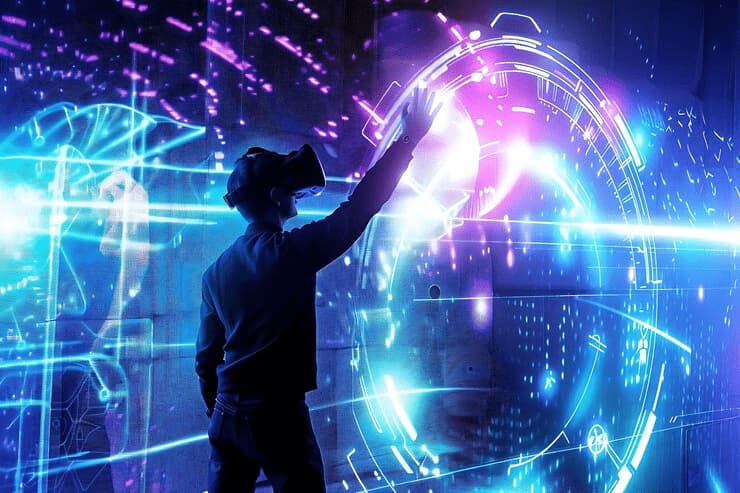
What is the Metaverse?
The term “Metaverse” has gained significant traction recently, mainly as technology evolves and our digital interactions become more immersive. But what exactly is the Metaverse? In this article, we’ll explore its definition, characteristics, potential applications, and the challenges it faces as it develops.
Defining the Metaverse
The Metaverse can be understood as a collective virtual space that integrates physical and digital realities, allowing users to interact with each other and digital environments in real time. This space is persistent, meaning it continues to exist and evolve even when individual users are not logged in. It encompasses a range of virtual environments, including:
– Virtual Reality (VR): Immersive experiences that require VR headsets, allowing users to engage with 3D environments in a lifelike manner. For instance, the Oculus Quest 2 immerses users in games like “Beat Saber” or “Half-Life: Alyx,” providing a captivating virtual experience.
– Augmented Reality (AR): Technology that overlays digital information and images onto the real world, enhancing the user’s perception of their surroundings. A notable application of AR is Pokémon GO, which allows players to catch virtual Pokémon in real-world locations.
– Mixed Reality (MR): A blend of VR and AR, where physical and digital objects coexist and interact in real time. Microsoft HoloLens is a prime example, enabling users to interact with holograms in their physical environment, such as visualizing 3D models of buildings during meetings.
Key Characteristics of the Metaverse
1. Persistence: The Metaverse exists continuously, with a shared environment that evolves based on user interactions and content contributions. “The Infinite Retina: How the Metaverse Will Change the World” by John Doe explains the persistence aspect in detail.
2. Interoperability: Ideally, the Metaverse allows users to move seamlessly between different virtual worlds and experiences, maintaining their identity and assets across platforms. Protocols like Web3 are being developed to enhance interoperability across decentralized platforms.
3. User-Generated Content: A significant aspect of the Metaverse is the ability for users to create and share their content, from virtual buildings to entire worlds, enhancing creativity and engagement. Platforms like Roblox empower users to develop their games and experiences, which can be monetized.
4. Social Interaction: The Metaverse is fundamentally social, encouraging users to interact, collaborate, and form communities. This social aspect is vital for the Metaverse’s growth and user retention. Jane Smith’s “The Social Metaverse: How Online Interaction Shapes Our Reality” discusses the importance of social interaction in digital spaces.
5. Economy: The Metaverse supports a digital economy where users can create, buy, and sell virtual goods and services, often using cryptocurrencies and blockchain technology to facilitate transactions. Decentraland allows users to buy virtual land and build a marketplace for digital assets.
Potential Applications of the Metaverse
The Metaverse has the potential to revolutionize various industries and aspects of daily life, including:
1. Gaming
Gaming is one of the most prominent areas where the Metaverse is already taking shape. Virtual worlds allow players to interact in real-time, participate in massive multiplayer experiences, and create game environments. “Gaming in the Metaverse: An Overview” by Alex Gamer provides insights into current trends in this dynamic sector.
2. Social Networking
The Metaverse offers new ways to connect with friends and meet new people through immersive virtual environments. Users can attend events, hang out in virtual spaces, and engage in shared experiences. VRChat is a platform that enables users to socialize in a 3D environment, fostering new connections.
3. Education and Training
Educational institutions can leverage the Metaverse to create immersive learning experiences. Virtual classrooms and training simulations can enhance understanding and retention, making learning more engaging. “Virtual Learning Environments: A New Frontier” by Emily Educator explores various educational applications in the Metaverse.
4. Work and Collaboration
The Metaverse can transform remote work by providing virtual offices and meeting spaces where colleagues can collaborate in real-time, regardless of their physical locations. Gather Town offers a virtual office environment where teams can meet and work together effectively.
5. Real Estate and Commerce
Virtual real estate is growing, with users buying, selling, and developing virtual land. Brands also establish a presence in the Metaverse, creating virtual storefronts and experiences. Mark Realestate’s “The Future of Virtual Real Estate” discusses economic trends in this emerging market.
Challenges Facing the Metaverse
While the Metaverse holds significant promise, it also faces several challenges:
1. Technical Limitations
Creating a fully immersive and seamless Metaverse requires advanced technology, including powerful hardware, high-speed internet, and sophisticated software solutions. Overcoming these limitations is crucial for widespread adoption, as current VR systems still face challenges like motion sickness and hardware costs.
2. Interoperability Issues
Achieving true interoperability among different platforms and virtual environments remains a complex challenge. Standard protocols and guidelines must be established to allow users to transition smoothly between experiences. “Building Bridges: Interoperability in the Metaverse” by Tech Innovators discusses ongoing efforts to address this issue.
3. Privacy and Security
As users engage in the Metaverse, data privacy and security concerns become paramount. Protecting user information and ensuring safe interactions will be critical to building trust in these virtual spaces. Recent data breaches in gaming platforms underscore the necessity for robust security measures.
4. Regulation and Governance
The Metaverse raises questions about governance and regulation, particularly concerning digital assets, user behavior, and content moderation. Establishing frameworks that protect users while encouraging innovation will be a significant hurdle. “Governance in the Age of the Metaverse” by Legal Scholar discusses these regulatory challenges in detail.
5. Digital Divide
Access to the Metaverse may exacerbate existing inequalities, as not everyone has the resources or technology to participate fully. Ensuring equitable access is essential for the Metaverse to be genuinely inclusive, and initiatives like internet access programs aim to bridge this gap.
Conclusion
The Metaverse represents a bold vision for the future of digital interaction, merging our physical and virtual lives in unprecedented ways. As technology advances, the possibilities within the Metaverse are vast and varied, offering opportunities for innovation across multiple sectors. However, realizing this vision will require overcoming significant challenges, including technical limitations, privacy concerns, and the need for regulatory frameworks.
As we move closer to a fully realized Metaverse, it is essential to foster discussions around its implications, ensuring that it becomes a space that enriches our lives, promotes creativity, and connects people across the globe. The journey toward the Metaverse is just beginning, and its evolution will undoubtedly shape how we interact with technology and each other.
Alpha Heroes on Amazon
References:
1. Doe, J. (2023). *The Infinite Retina: How the Metaverse Will Change the World*. Publisher.
2. Smith, J. (2023). *The Social Metaverse: How Online Interaction Shapes Our Reality*. Publisher.
3. Gamer, A. (2023). *Gaming in the Metaverse: An Overview*. Publisher.
4. Educator, E. (2023). *Virtual Learning Environments: A New Frontier*. Publisher.
5. Realestate, M. (2023). *The Future of Virtual Real Estate*. Publisher.
6. Tech Innovators. (2023). *Building Bridges: Interoperability in the Metaverse*. Publisher.
7. Legal Scholar. (2023). *Governance in the Age of the Metaverse*. Publisher.