Simulation Theory: Exploring the Fabric of Reality
What if everything you see, feel, and experience, the people, the stars, the entire universe, is not real in the traditional sense, but part of a vast, complex simulation? The question sounds like science fiction…
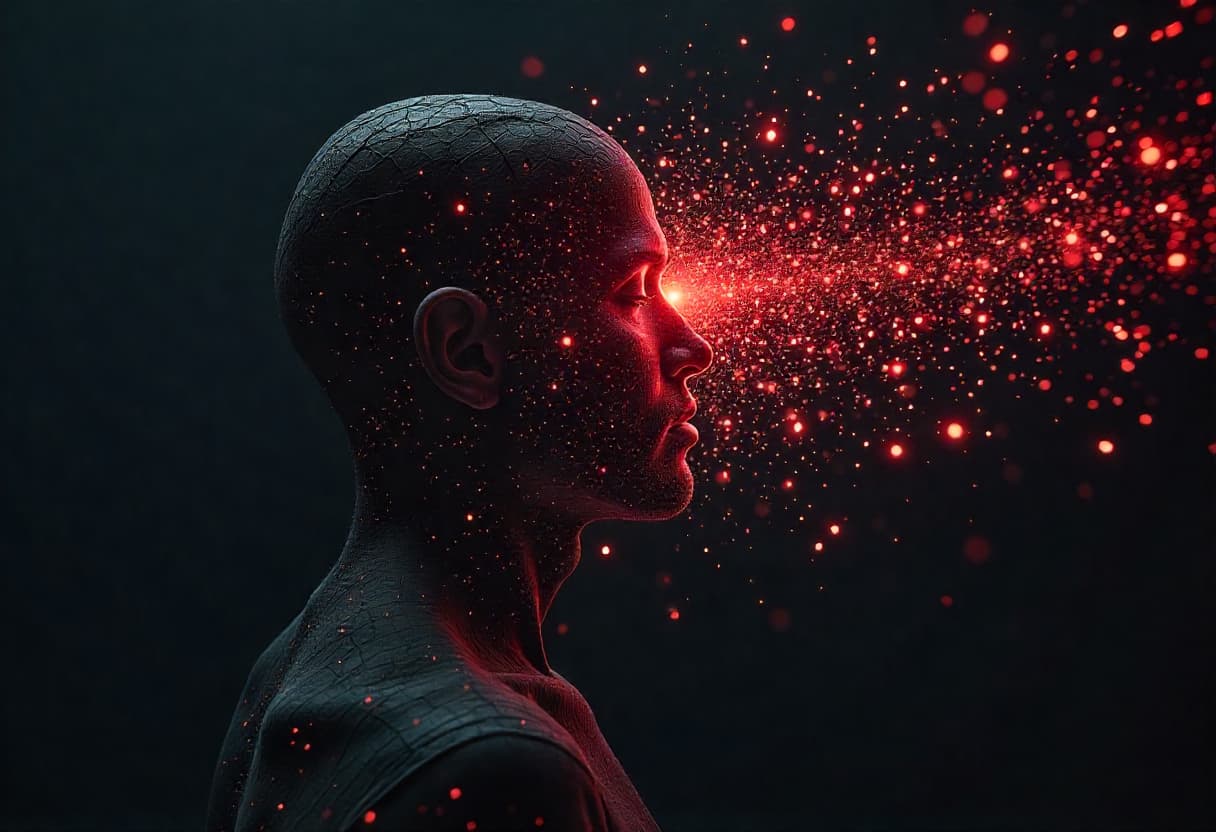
What if everything you see, feel, and experience, the people, the stars, the entire universe, is not real in the traditional sense, but part of a vast, complex simulation? The question sounds like science fiction, yet it is one that some of the world’s greatest minds take seriously.
Simulation Theory, a concept once confined to philosophy and imagination, now stands at the crossroads of physics, technology, and artificial intelligence. As we build more intelligent systems, more immersive virtual realities, and powerful computational frameworks, we are coming closer to understanding whether our own reality could be a digital construct.
At MetaTech Web Solutions, where innovation meets intelligence, we explore how simulation theory connects with the future of computing, artificial intelligence, and digital evolution. This is not just a conversation about existence; it is about the trajectory of human technology and the boundaries of creation itself.
What Is Simulation Theory?
Simulation Theory proposes that our reality could be an artificial construct, an incredibly advanced computer simulation created by a higher intelligence or civilization.
The theory was popularized by philosopher Nick Bostrom in 2003 through his paper “Are You Living in a Computer Simulation?” Bostrom suggested three possibilities:
-
Civilizations never reach a technological level capable of creating such simulations.
-
Civilizations that reach that level choose not to create simulations.
-
We are almost certainly living inside one.
If the third scenario is true, our reality—every atom, emotion, and event—could be code running on a cosmic supercomputer.
While this might sound like a concept from The Matrix, the argument has attracted the attention of physicists, philosophers, and technologists. Figures like Elon Musk and Neil deGrasse Tyson have both commented that the odds we are living in “base reality” may be smaller than we think.
Why Technology Makes the Theory More Plausible
The more advanced our own technology becomes, the more Simulation Theory begins to seem scientifically possible. Consider how far we have come in just a few decades.
1. Virtual Reality and Immersive Worlds
With VR headsets, haptic feedback systems, and AI-driven environments, humans can now enter digital spaces that mimic physical reality with startling realism.
As processing power increases, the difference between simulated and actual experience becomes harder to detect. If we can create immersive simulations today, who’s to say a far more advanced civilization hasn’t already done the same at a higher level?
2. Artificial Intelligence and Consciousness
AI models like large language systems and neural networks can now learn, respond, and even mimic human emotion. While they lack true consciousness, the rapid acceleration of machine learning suggests that sentient AI may eventually emerge.
If we can one day create conscious entities within a simulation, it implies that a higher civilization could have already done so—with us.
3. Quantum Physics and Information Theory
Modern physics increasingly points to a universe that behaves like a digital system. Quantum mechanics suggests reality is quantized—it breaks down into discrete packets of energy, similar to pixels on a screen.
Even more fascinating, some scientists theorize that information may be the most fundamental building block of the universe. If that’s true, then the universe itself could be a vast information network—a simulation at the highest order.
The Digital Parallel: Web3 and the Emergence of Simulated Worlds
In today’s digital landscape, humanity is already creating its own simulated realities through Web3, virtual environments, and AI ecosystems.
1. The Metaverse
The metaverse represents the first large-scale attempt to simulate living environments online. With blockchain-based ownership, digital currencies, and virtual real estate, users can work, socialize, and build lives in parallel to their physical existence.
These systems run on vast computing networks, each rendering digital physics, economies, and interactions that mirror aspects of our own world.
2. Blockchain as the Foundation of Simulated Value
Blockchain technology, the foundation of Web3, creates immutable digital records that mimic the structure of “laws” in a simulation. Transactions are verified, identities are unique, and value is self-contained—just as the laws of physics define structure and consistency in our physical world.
This decentralized logic suggests how complex realities can sustain themselves through code and consensus, much like how our universe maintains order through natural laws.
3. Digital Consciousness and AI Integration
As digital entities—avatars, AI assistants, or generative systems—interact within these environments, the line between human and machine-created consciousness continues to blur.
At MetaTech, we see these developments as the first step toward building living data systems, where technology learns, evolves, and interacts autonomously. These systems might one day mirror the very fabric of what Simulation Theory describes.
Scientific and Philosophical Evidence for the Theory
Simulation Theory is supported by patterns and paradoxes in physics and philosophy that suggest our universe might not be entirely organic.
1. Mathematical Precision in Nature
The laws of physics operate with exact mathematical consistency. From gravity to quantum entanglement, every natural phenomenon follows measurable equations. This precision resembles programming—rules coded into reality.
As physicist Max Tegmark once said, “The universe is not just described by mathematics—it is mathematics.”
2. The Pixelation of Reality
At the smallest measurable scale, space and time appear quantized, meaning there are limits to how finely we can divide them. This idea suggests a possible “resolution limit,” as though the universe were rendered on a computational grid.
If the universe is a simulation, these limits might correspond to the “processing power” of the underlying system.
3. The Fine-Tuning Problem
The physical constants of the universe are incredibly precise. Even a minor variation in gravitational force or atomic mass could make life impossible. Simulation Theory offers a provocative explanation: perhaps these constants are intentionally programmed to create conditions for existence.
The Counterarguments
While Simulation Theory is fascinating, it is also controversial. Many scientists argue that the idea is unfalsifiable—meaning it cannot be tested or proven.
Critics also point out that simulating an entire universe down to every particle would require unimaginable computing power. Even if future civilizations are advanced, the energy and resources required might make such a project impossible.
However, proponents argue that simulations need not run at full resolution. Just like video games render only what a player sees, a simulated universe might only compute detailed environments when observed—aligning intriguingly with quantum observer effects in physics.
Implications for the Future of Technology
Whether or not Simulation Theory is true, exploring it has real implications for the future of digital technology, AI, and ethics.
-
Innovation: Understanding the principles of simulated systems can lead to breakthroughs in computing, architecture, and artificial consciousness.
-
Ethics: If AI becomes self-aware, humanity must redefine what it means to create and manage intelligent life.
-
Existence: The theory invites deep reflection on purpose, creation, and the role of intelligence in shaping worlds—both real and artificial.
At MetaTech Web Solutions, we see parallels between the architecture of the digital world and the logic that might govern reality itself. The systems we build—AI-powered frameworks, data ecosystems, and intelligent digital environments—mirror the order and structure of the universe.
Living in the Code of Creation
Whether the Simulation Theory proves true or not, one fact is undeniable: we are becoming creators of our own simulations. From digital twins to immersive metaverses, humanity is learning to craft worlds governed by code and consciousness.
Perhaps that is the point. If reality is a simulation, then our ability to build simulations reflects the same creative spark that designed us. The deeper we explore technology, the closer we come to understanding existence itself.
At MetaTech Web Solutions, we believe the study of digital systems is not just about innovation—it is about insight. The boundary between code and cosmos is thinner than we imagine. By exploring it, we move closer to mastering not only technology but the very fabric of reality.