Minecraft: Building Blocks of Creativity and Education
Few video games have left a cultural mark as profound as Minecraft. What began as a simple sandbox game in 2009 has grown into a global phenomenon that continues to inspire millions of players, educators, and…
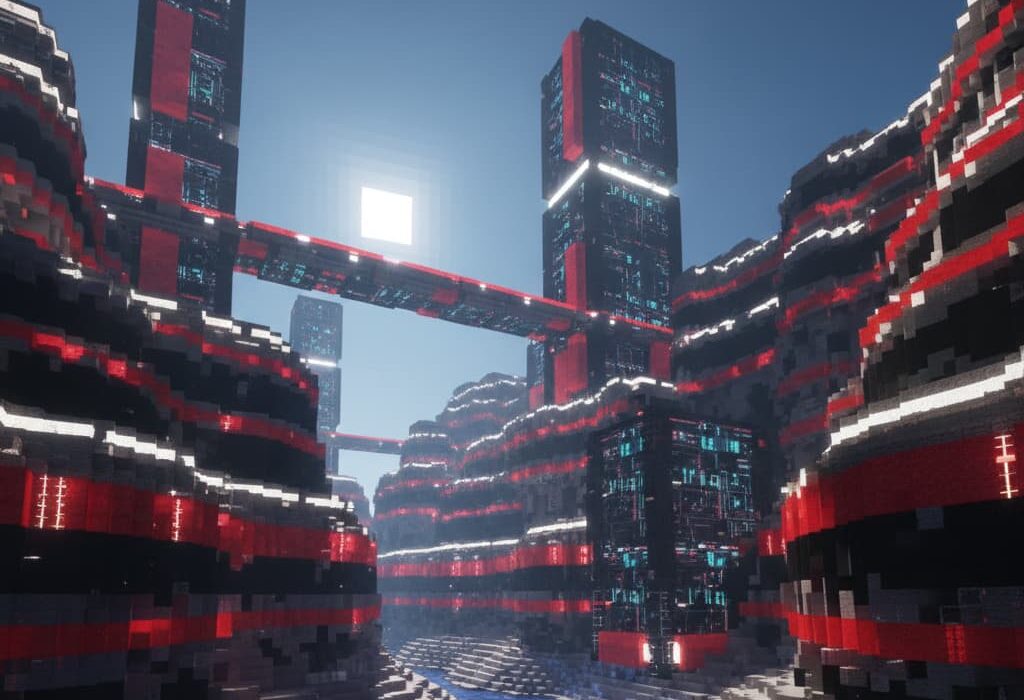
Few video games have left a cultural mark as profound as Minecraft. What began as a simple sandbox game in 2009 has grown into a global phenomenon that continues to inspire millions of players, educators, and innovators. With over 140 million monthly users, Minecraft has become more than just entertainment; it has evolved into a digital platform for creativity, collaboration, and learning.
At MetaTech Web Solutions, we recognize that digital ecosystems like Minecraft represent the next generation of interactive technology and educational innovation. The same principles that drive Minecraft, exploration, design, and imagination are at the heart of what fuels creativity and problem-solving in the digital era.
This blog explores how Minecraft has become a bridge between play and education, and how its open-ended world-building philosophy aligns with the way technology is shaping the future of learning and creativity.
The Genesis of Minecraft: A World Without Limits
Minecraft was developed by Markus Persson, also known as “Notch,” as a game centered around building and exploration. Its concept was simple yet revolutionary: an open world composed entirely of blocks that players could mine, craft, and reshape.
Unlike most games with strict rules or linear objectives, Minecraft gave players total freedom. There were no predefined goals, just an infinite landscape of possibilities. This design encouraged creativity, experimentation, and ownership of one’s experience.
Over the years, the game evolved into various modes:
-
Survival Mode: Players gather resources, build shelters, and fend off enemies.
-
Creative Mode: Players have unlimited resources and can focus entirely on design and exploration.
-
Adventure Mode: Custom worlds with rules and stories designed by creators.
-
Education Edition: A specialized version tailored for classrooms, blending gameplay with learning objectives.
Through these modes, Minecraft transformed from a gaming platform into a creative ecosystem, where imagination meets innovation.
Minecraft as a Digital Canvas for Creativity
Minecraft’s most powerful feature is its limitless creative potential. The game allows players to construct virtually anything, from small cottages to functioning computers and replicas of entire cities.
This digital architecture has made Minecraft a tool for art, design, and engineering education. Players learn spatial reasoning, resource management, and logical sequencing as they experiment with structures and systems.
For many, Minecraft serves as a gateway to programming and game design. Using Redstone, Minecraft’s in-game circuitry material, players can build complex mechanisms like doors, elevators, and logic gates. This introduces concepts similar to electrical engineering and coding, making it one of the most engaging ways to learn STEM fundamentals.
MetaTech sees parallels here between digital design and professional development in modern technology. Much like Minecraft, web development and software engineering rely on creative problem-solving, iterative building, and a willingness to experiment, skills that Minecraft fosters from an early age.
The Educational Revolution: Minecraft in the Classroom
In 2016, Microsoft launched Minecraft: Education Edition, a version designed to turn classrooms into collaborative learning environments. Educators quickly discovered that the game could be far more than entertainment—it could be a powerful educational tool.
1. Encouraging Collaboration
Students can work together on shared projects, such as designing a sustainable city, reconstructing historical landmarks, or conducting virtual science experiments. This promotes teamwork, communication, and project-based learning.
2. Teaching STEM Concepts
Minecraft naturally integrates science, technology, engineering, and mathematics. Through resource management, environmental design, and Redstone mechanics, students engage in experiential learning that reinforces problem-solving and analytical thinking.
3. Enhancing Creativity and Expression
The game empowers students to think outside the box. Whether designing art exhibits or developing custom landscapes, it fosters originality and expression in a digital medium.
4. Building Digital Citizenship
Minecraft’s multiplayer and online collaboration features help students learn digital ethics, respect, and teamwork, essential skills in an interconnected world.
Educators have also used the platform for lessons in history, geography, and literature. For example, recreating ancient Rome or the Great Pyramids gives students an interactive experience that brings historical contexts to life.
Minecraft and the Metaverse: The Future of Virtual Learning
As the concept of the metaverse, a collective virtual space that merges reality and digital environments, continues to grow, Minecraft stands as an early example of what a connected, interactive digital world can look like.
Players engage in virtual economies, own digital spaces, and participate in social interactions that mirror real-world communities. This is exactly the kind of foundation that Web3 technologies are expanding upon: decentralized ownership, creative collaboration, and immersive interaction.
In many ways, Minecraft is the prototype of the metaverse. It showcases how virtual environments can bring people together to achieve shared goals, learn, and innovate.
MetaTech Web Solutions views this as a reflection of how technology should evolve, not just to entertain, but to empower and educate. Digital spaces like Minecraft illustrate how future technologies can merge education with experience, transforming how humans engage with information.
Lessons Minecraft Teaches About Innovation and Problem Solving
Beyond classrooms and servers, Minecraft teaches critical lessons about innovation, lessons that extend into technology, business, and creativity.
1. Curiosity Drives Creation
Players learn by exploring and experimenting. This same mindset fuels breakthroughs in technology, where curiosity and iteration lead to discovery.
2. Collaboration Builds Stronger Systems
Just as multiplayer worlds thrive on teamwork, technological progress depends on collective intelligence. Open-source communities, cloud systems, and AI collaborations mirror this principle.
3. Resourcefulness Leads to Sustainability
Minecraft teaches players to balance limited resources for survival. Similarly, modern innovation prioritizes sustainable development and efficient use of energy and data.
4. Adaptability Fuels Growth
Each Minecraft world is unpredictable, forcing players to adapt quickly. This flexibility mirrors real-world success in evolving industries like software, AI, and digital infrastructure.
The Business and Design Perspective
Minecraft’s success also offers lessons for entrepreneurs and digital creators. The game’s user-generated content model and community-driven ecosystem are examples of how digital platforms can grow organically when users feel empowered.
Creators design custom maps, mods, and skins, while others build entire businesses around Minecraft servers and experiences. This creator economy reflects a core principle of Web3 and digital entrepreneurship: value grows when creativity and ownership are decentralized.
At MetaTech Web Solutions, we apply similar strategies in digital development. By combining design freedom, interactive systems, and user empowerment, we help brands and organizations create digital ecosystems that are not only functional but engaging and future-ready.
Minecraft and AI: The Next Step in Intelligent Worlds
As artificial intelligence continues to evolve, researchers are using Minecraft as a testbed for AI training. AI models like Microsoft’s “Project Malmo” use the game’s complex, open-ended environment to learn planning, navigation, and creativity.
This research helps AI understand context, problem-solving, and decision-making in dynamic environments, skills essential for future intelligent systems. Minecraft is effectively teaching AI how to think.
The overlap between AI and virtual creativity highlights the merging frontiers of human imagination and machine learning, a field that MetaTech continues to explore through data-driven innovation and digital architecture.
The World We Build Together
Minecraft is more than a game. It reflects human creativity, collaboration, and the limitless potential of digital innovation. Its ability to inspire creativity in both children and adults shows how technology, when used thoughtfully, can be a powerful tool for learning and imagination.
Just as players build worlds one block at a time, so too does the digital future evolve through curiosity, collaboration, and creativity.
At MetaTech Web Solutions, we believe the same principles that underpin Minecraft’s success guide the evolution of technology: empowering users, building interactive environments, and turning imagination into innovation.
Whether constructing virtual landscapes or designing intelligent digital systems, the foundation remains the same; every idea begins with a single block.