How AI Will Transform Music: A Comprehensive Exploration
For centuries, music has been the heartbeat of human culture. From classical symphonies to modern streaming platforms, the art of sound has continuously evolved with technology. Now, we stand at the edge of a new…
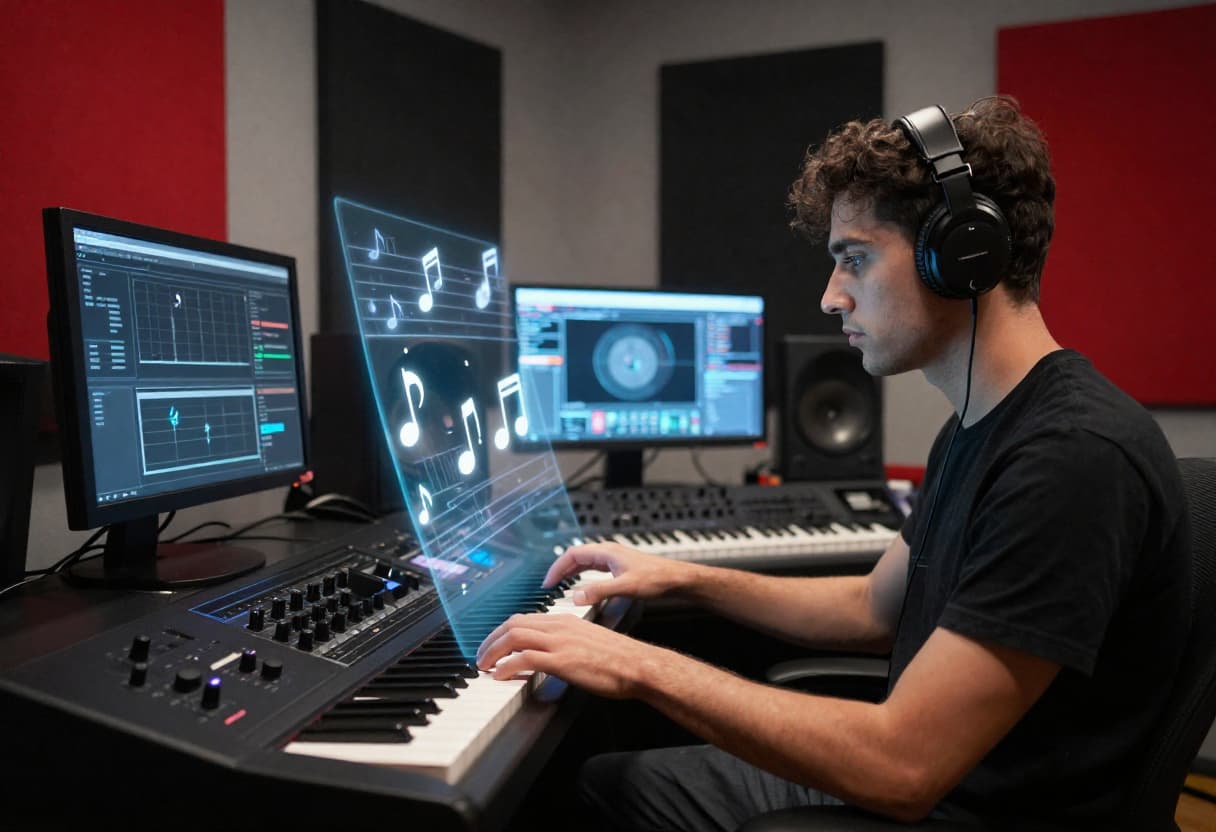
For centuries, music has been the heartbeat of human culture. From classical symphonies to modern streaming platforms, the art of sound has continuously evolved with technology. Now, we stand at the edge of a new revolution, one led by Artificial Intelligence (AI).
AI is transforming not only how we listen to music but also how it is composed, produced, distributed, and experienced. It is redefining creativity, reshaping industries, and challenging our understanding of what it means to be an artist.
At MetaTech Web Solutions, we recognize AI as more than a tool; it is an ecosystem that integrates data, creativity, and emotion. The transformation of music through AI is one of the clearest examples of how technology can amplify human potential rather than replace it. This article explores how AI will reshape the world of music from creation to consumption, and what this means for artists, producers, and listeners alike.
1. The Rise of AI in Music Creation
The concept of AI creating music once seemed like science fiction. Today, it’s a daily reality. Tools such as OpenAI’s MuseNet, Google’s Magenta, and AIVA (Artificial Intelligence Virtual Artist) can compose full-length musical pieces across multiple genres and styles.
AI learns from vast datasets of existing music, analyzing melody, rhythm, structure, and harmony. Using machine learning algorithms, it can generate new compositions that sound remarkably human.
The benefits are transformative:
- Instant inspiration for artists. Musicians can collaborate with AI tools to overcome creative blocks.
- Customization. Brands, video creators, and filmmakers can request original music that fits specific moods, lengths, or visual tones.
- Accessibility. Anyone, even without formal musical training, can produce professional-sounding tracks with AI assistance.
AI doesn’t eliminate the human touch; it enhances it. Much like how digital instruments once revolutionized music production, AI expands creative horizons while keeping human emotion at the core.
2. AI in Sound Engineering and Production
Music production has traditionally required skilled engineers to fine-tune sound balance, mixing, and mastering. With AI-driven software, this process becomes faster, wiser, and more precise.
AI analyzes audio frequencies in real time, identifies inconsistencies, and automatically adjusts equalization or compression. Programs like LANDR and iZotope’s Ozone use AI to master tracks in seconds, producing results that rival those of studio-level engineers.
For producers, this means more time spent on creativity rather than repetitive tasks. For artists, it means lower production costs and higher accessibility to professional-quality sound.
At MetaTech, this mirrors our philosophy: automation should elevate creativity, not replace it. AI systems optimize the technical layer so humans can focus on expression, storytelling, and innovation.
3. Personalized Listening Experiences
AI is also redefining how listeners experience music. Streaming platforms such as Spotify, Apple Music, and YouTube Music already use AI to curate playlists tailored to each user’s preferences. But the future goes much deeper than algorithmic recommendations.
Imagine a world where your playlist dynamically adapts to your heartbeat, location, or current mood. Using biometric sensors and environmental data, AI could generate real-time adaptive soundtracks that evolve with your daily life.
For example:
- During workouts, tempo and bass increase to boost motivation.
- During meditation, melodies shift to calmer tones.
- During work, instrumental focus tracks blend with your cognitive rhythm.
This is hyper-personalization, the next frontier of user engagement. By merging behavioral data with emotion detection, AI turns listening into a living experience.
4. The Evolution of Live Music and Performance
AI is not confined to the studio. It’s entering the stage. Artists like Grimes, Holly Herndon, and YACHT have already collaborated with AI to co-produce albums or integrate generative visuals during live shows.
AI-driven holograms, motion sensors, and real-time generative music allow performers to interact with technology as a creative partner. Concerts are becoming multi-sensory experiences, where visuals, lighting, and sound adapt dynamically to audience energy.
In the near future, virtual reality (VR) concerts powered by AI will allow fans worldwide to experience live performances from anywhere. The performer’s movements, sound modulation, and audience engagement will all be guided by intelligent algorithms that learn from crowd feedback.
MetaTech sees this as an extension of human connectivity through data. Technology becomes an instrument, amplifying the emotion of art and bringing people together on a global scale.
5. AI’s Role in Music Marketing and Distribution
AI is also transforming the business side of music. Predictive analytics can identify trends before they happen, guiding marketing campaigns and helping record labels make smarter decisions.
AI tools analyze millions of data points across social media, streaming platforms, and fan interactions to forecast which songs or artists are likely to succeed. They can also identify niche audiences and recommend optimal release strategies.
For independent artists, AI-driven platforms enable smart distribution by choosing the best channels, pricing, and promotional timing based on real-time insights. This democratizes access to global markets and levels the playing field for creatives everywhere.
At MetaTech Web Solutions, we apply similar AI-driven analytics principles to web strategy and digital optimization. Data isn’t just numbers; it’s the rhythm of modern innovation.
6. Ethical and Creative Challenges Ahead
While AI opens doors to new possibilities, it also raises complex questions:
- Who owns AI-generated music?
- Can a machine truly create something original?
- How can we preserve the emotional essence of art in an age of automation?
These challenges require a balance between innovation and ethics. Legal frameworks will need to evolve to define authorship, copyright, and revenue distribution for AI-generated works.
Artists, too, will need to redefine their creative identity. Rather than seeing AI as a competitor, the next generation of musicians will embrace it as a collaborator, a partner that enhances their artistic intent.
At MetaTech, we view AI as a force for augmented creativity. Technology does not replace the human spirit; it provides a canvas where imagination and intelligence intersect.
7. The Future: A Symphony of Humans and Machines
The ultimate transformation AI brings to music lies not in automation but in collaboration. Future composers might train personal AI models on their style, creating a digital version of themselves capable of composing symphonies or film scores long after they are gone.
Fans could interact with these AI models to commission unique pieces inspired by their favorite artists. Imagine listening to “new” music by Beethoven or The Beatles, composed through AI models trained on their creative DNA.
This convergence of history, emotion, and machine learning will redefine how we preserve and evolve human culture. Music, in its purest form, will become eternal.
Conclusion: The Harmony Between Technology and Creativity
AI is not the end of music; it is its next verse. It is transforming every aspect of the industry, from how songs are born to how they reach our ears. Yet amid the algorithms, sensors, and datasets, one truth remains: music is still a human story.
The tools may evolve, but the soul of creativity endures. The real power of AI lies in its ability to enhance expression, bridge technology and humanity, and create experiences that resonate deeper than ever before.
At MetaTech Web Solutions, we see this transformation as part of a larger digital symphony, one where design, data, and emotion play in perfect harmony. Whether in music, business, or digital communication, AI is the conductor leading us into a brighter, more connected future.
The question is not whether AI will change music; it already has. The real question is how we, as creators and innovators, will compose the future alongside it.