Andrew & The Elephant
Andrew Carnegie’s life is an inspiring example of how imagination, perseverance, and risk-taking can lead to great achievements. Born in Scotland in 1835, Andrew emigrated to America with his family at the age of…
Andrew Carnegie’s life is an inspiring example of how imagination, perseverance, and risk-taking can lead to great achievements. Born in Scotland in 1835, Andrew emigrated to America with his family at the age of twelve. He worked tirelessly in a cotton mill and eventually became a telegraph messenger boy, gaining valuable experience and insight into the steel industry through his work for the Pennsylvania Railroad. His curiosity and determination led him to start his own steel company, Carnegie Steel, using innovative technology and production methods to create a massive and efficient steel mill in Pittsburgh, Pennsylvania.
During the Industrial Revolution, the steel industry was critical in the development of the expanding economy. Steel was used to build railroads, bridges, and skyscrapers, and its demand only continued to grow. Andrew’s entrepreneurial spirit and knowledge of the steel industry enabled him to become one of the most successful entrepreneurs of his time. However, his vision was put to the test in 1874 when he was commissioned to build a steel bridge in Missouri.
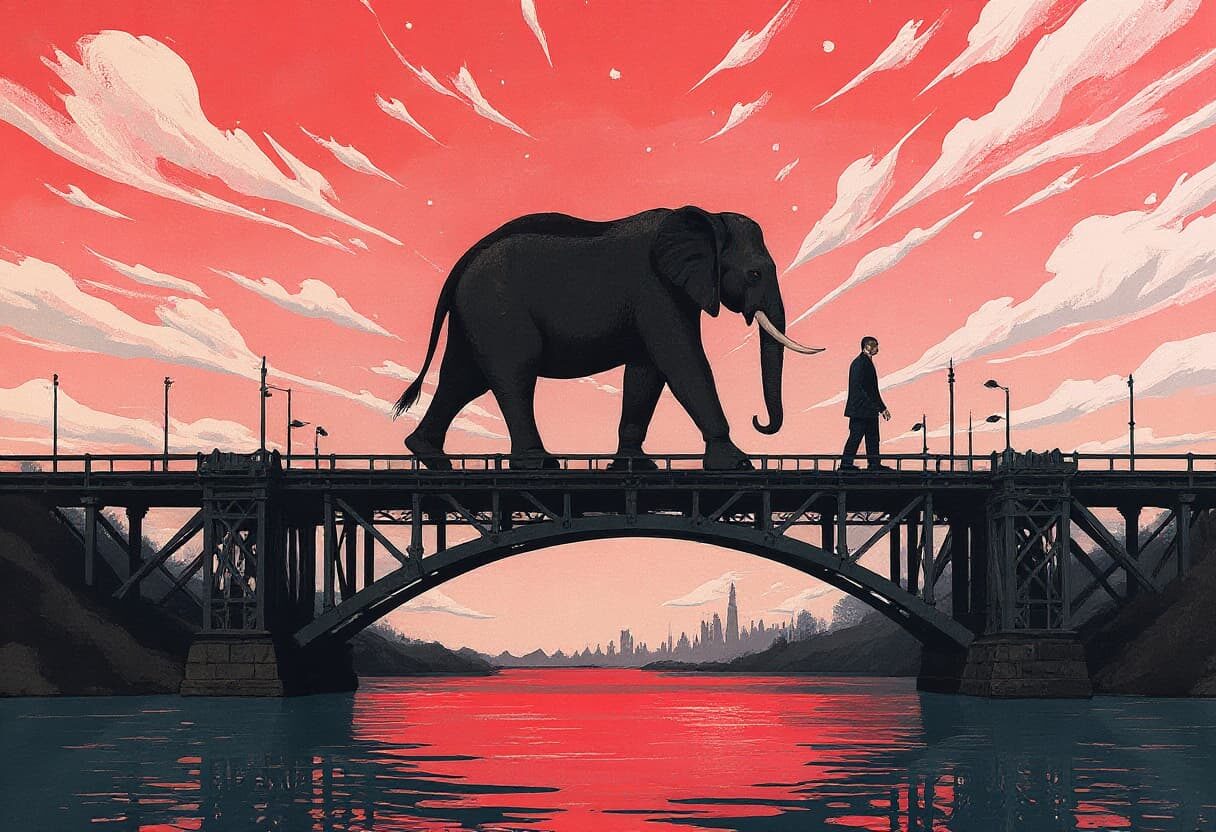
The people of the town were skeptical of this new material and refused to cross the bridge, believing that it was too unstable and would collapse at any moment. Andrew knew he had a significant problem to solve. He needed to convince the people of Missouri that the steel bridge was safe, and to do so, he came up with a creative plan. He remembered a story from his childhood about elephants not crossing unstable structures, so he hired an elephant named Jumbo to walk across the bridge, demonstrating its strength and stability.
Andrew approached Jumbo with trepidation, as he had never been that close to an elephant before and was unsure how the animal would react to him. However, Jumbo seemed to sense Andrew’s good intentions, and he allowed the steel pioneer to lead him onto the bridge. The people of Missouri watched in awe as Jumbo lumbered across the steel structure. They held their breath as the elephant’s massive feet pounded against the metal, waiting anxiously for the bridge to collapse. But the bridge held firm, and Jumbo made it to the other side.
The people of Missouri were finally convinced that the bridge was safe, and so they crossed it, not just physically, but metaphorically. They crossed from a time of fear and uncertainty into a new era of progress and hope. The bridge became a symbol of the power of courage, imagination, and grit. For Andrew, the success of the bridge was a reminder that sometimes the greatest achievements come from taking the biggest risks. He looked back on his life, realizing that it was the moments of fear and trepidation that had pushed him to new heights and allowed him to leave his mark on the world.
Andrew continued to innovate and improve the steel industry, expanding his empire until it became the largest steel company in the world. His story reminds us that with courage and a willingness to take risks, anything is possible. The bridge that Jumbo crossed became a symbol of that spirit, a testament to the power of imagination and grit in the face of uncertainty and doubt.
Andrew’s journey is a testament to the power of imagination, entrepreneurship, and grit for entrepreneurs. He recognized the potential of the steel industry, and he was willing to take the risks necessary to bring his vision to life. He did not allow the fear of failure to hold him back, and he was undeterred by the challenges he faced along the way. His story serves as an inspiration to those who are willing to take the path less traveled, who are willing to embrace the unknown and turn their imaginations into reality.
The industrial revolution, of which Andrew was a part, marked a time of significant change in the world. It was a time of rapid innovation and development, of new ideas and inventions that transformed the way people lived and worked.
The steel industry played a vital role in the industrial revolution, and Andrew’s understanding of the industry and his entrepreneurial spirit allowed him to take advantage of this booming business. He built a massive and efficient steel mill in Pittsburgh, Pennsylvania, using innovative technology and production methods. His shrewd business sense and relentless pursuit of profits made him a true titan of industry, and he continued to innovate and improve the steel industry, expanding his empire until it became the largest steel company in the world.
However, Andrew’s success was not without its challenges. He faced fierce competition from other steel companies, including one led by his former business partner Henry Frick, which eventually led to the infamous Homestead Strike of 1892. The violent labor dispute resulted in several deaths and injuries, and although Andrew was not directly involved, it tarnished his reputation as a fair and just employer.
Despite this setback, Andrew continued to focus on growing his business and giving back to society. He believed that the wealthy had a responsibility to use their wealth for the greater good, and he became a philanthropist, donating large sums of money to fund education, libraries, and other public institutions. He founded the Carnegie Corporation of New York, which has since provided billions of dollars in grants to support education and research.
Andrew’s commitment to giving back to society was in part a result of his own humble beginnings. He never forgot the struggles he faced as a poor immigrant working in a cotton mill, and he believed that everyone should have the opportunity to succeed, regardless of their background. His legacy serves as a reminder that success should not come at the expense of others, and that we all have a responsibility to use our talents and resources for the greater good.
In many ways, Andrew’s life can be seen as an allegory for the industrial revolution and the impact it had on society. The steel bridge he built in Missouri represented the spirit of innovation and progress that characterized the era, while the skepticism and fear of the people of Missouri reflected the anxieties and uncertainties that came with the rapid changes of the time. Andrew’s willingness to take risks and his determination to overcome obstacles symbolized the spirit of the entrepreneurs and dreamers who drove the industrial revolution forward, while his commitment to giving back to society represented the sense of social responsibility that emerged in response to the inequities and inequalities created by the new economic system.
Andrew Carnegie’s story is a powerful reminder of the potential of the human spirit to overcome obstacles and achieve greatness. His example shows that success requires hard work, determination, and a willingness to take risks, but also that it must be accompanied by a sense of social responsibility and a commitment to the greater good. His life and legacy continue to inspire entrepreneurs, innovators, and dreamers everywhere, and serve as a testament to the power of imagination, entrepreneurship, and grit in the face of uncertainty and doubt.
Source: https://medium.com/@jeff_57069/andrew-the-elephant-72eef21d6577